Sunday, October 28, 2018

Kids and Nature can be Unstructured or Structured

There is a lot of interest today in reconnecting kids with the outdoors, to learn some basics regarding life in general.  But, this unstructured time can be highly controlled by adults, or it can be uncontrolled by adults... Both are beneficial to children, but unsupervised outdoor experience is better---presuming the adults are courageous enough to allow it to happen.
We both grew up in an era and an environment that was conducive to playing outdoors.  Perhaps that was because of the absence of television and certainly before cell phones and digital games.  We have always looked upon our experiences in the out of doors as a “given” and not anything unique.   That’s all changed---especially for the urban population.
On the subject of nature, as we like to write about each month, we often hear how we must do certain things to preserve and protect things in nature.  We hear that native plants, clear running streams, all the natural components of the out of doors need our help to survive.  Because of population growth and land development, there is no doubt that is true.
Then we happened on the comment by a conservationist which went something- like this:  “We need nature as much as nature needs us”.
So, for this newsletter, we did some research into that concept and here is what we found:
Children are increasingly "contained" either by their parents and school teachers or by their own choice.  Kids are in car seats, in strollers at the supermarket, or riding in the shopping basket at the grocery store.  In schools, recess has mostly disappeared so they are contained in their classroom the entire time.  If by chance they do get outside to the school play yard they are tightly controlled by an adult.  Then, if not contained by an adult, then they choose containment by staying indoors to play games on their cell phone, or some other digital toy.
All of this is at the cost of being outdoors and to experience the complexity and intricacy of nature.  Children exposed to nature have shown significantly better cognizant skill than those who do not have any exposure to the outdoors.
Those studying this connection between learning and exposure to the natural world have found some strange situations.  For example, many children who have not spent any time out of doors are hesitant to sit on the grass.
Organized programs to take a kid fishing, or hiking or whatever are steps in the right direction, but the real exposure comes when kids are allowed to do all this by themselves.
With our interest in this subject, we chose to attend a brief presentation by Ryan Spencer from the Meadows Center. He spoke about this and referred us to the organization named Children and Nature Network.
Children and Nature Network is front and center on this topic.  Check out their website by searching for children and nature.
This is not a new interest on the part of educators, but it has not received the interest of the public schools that it should have by now.

Sunday, September 23, 2018

Getting some good reads

On 9.5.2018, Gail writes: "....the book takes you back to those days"  and then goes on to say: "we really enjoyed it...… wonderful book with wonderful stories"

Sunday, September 16, 2018

.............and from the Los Angeles Times:

Ms Healy, an author who writes about such topics as this one, has cited several specialists who believe that kids should have some free time to explore their own world.

It appears that the school system has become so top heavy that it has resulted in consuming the time of the children in addition to the valuable time of the teachers, all who are suffering from overload of administrative "stuff".


and the backside:


If the reader can not read the expanded view, try this link to the newspaper article.  It doesn't have the sailboat chalk picture (neat, huh?) but the story is there and readable.


Wednesday, August 22, 2018

Unstructured Time Readers

We now have about six months of readership data on the book Unstructured Time.  Its really too early to characterize the readership, but some early data seems to indicate that readers can be in two groups.  Those who are older and those who are younger.  Hah, this is not a risky way to group the readers as nearly everything can be sorted out by young versus old.
But anyway, here is the take on the matter.
The older people really like the read. They tell us that it all brings back their memories of how they played and worked as children and they go on to say that this time of their development was valuable to them.  They think that some of the learnings from that life style are lost in todays times.  The authors realize this too, but they also realize that the rural environment, with its unstructured time probably missed some aspects for development due to its relative isolation.
The younger people who read the book are not enthusiastic readers.  They appear not to relate to this type of unstructured life, because to them, its all rather hypothetical.
So, this represents a challenge to us to consider how such a topic can be presented to the younger audience to assist them in their identifying themselves with this aspect of child development.

Unrelated, but nevertheless a good read is a book rediscovered in my library.  The title is FROM THE LAND AND BACK  by Curtis Stadtfeld.  It is a book written about farm life in the 1950s and how technology changed all that.  Look for it in your local library.

Friday, January 12, 2018

Observations on the road

We stopped into our favorite coffee shop the other day, on the way home from talking to the people at Reclaimed Space.  The coffee shop owners are a young couple with a 2 year old boy.  We got into the conversation of unstructured time and it was apparent that she was tuned into the importance of not controlling the little kids minute by minute activity.
She relates this story:  The family does not have a television service, so the TV set is viewed only on occasions of viewing a pay for play movie.  Because they have no TV service, the little kid is often about the house amusing himself.  She said "he can play for hours with blocks and other simple forms as toys".  However, on occasions he has stayed with his grandparents for several days at a time and they do have television and,, yes, it is on all the time.  During up time, they of course have it tuned to stuff for the kid.  On returning home, the mother reports that the little kid is unable to play by himself for more than 15 minutes without getting antsy.  After several days, this wears off and he again can play for long periods of time by himself.
No wonder so many kids have ADS.

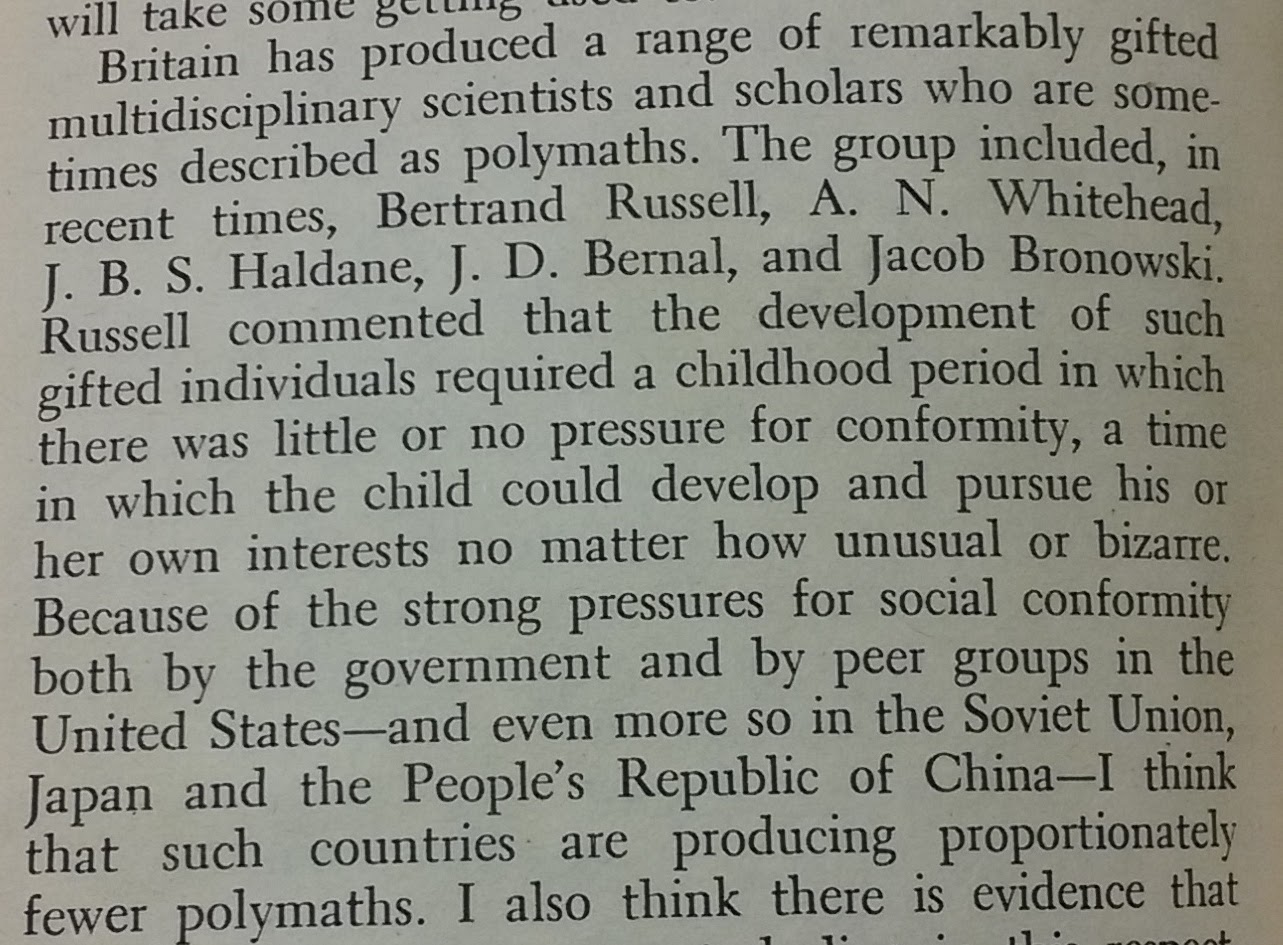
Reading an old book by Carl Sagan, titled The Gardens of Eden, p. 202, there is this small paragraph which deals with unstructured time:


Thursday, January 11, 2018

Unstructured Time, the book, is available

After many months of writing, rewriting and editing, the book made it through the prnter.
We think it turned out pretty good and should provide some interesting reading and thought provoking points about unstructured time for children.

Here's the cover, you can buy it at nq99hq store on Etsy.com:


Tuesday, December 26, 2017

Preface of the book

Preface

The stories and the discussion in this book are about unstructured time-----time that a child might have when not directed by an adult.  Urbanization and changes in the social environment have caused a significant reduction in unstructured time in the last 60 years for most children.
The authors had a lot of unstructured time in their youth. We spent much of that time exploring the world around us and learning from those experiences. Our world was rural, mostly farming country, located in Ada Township.  The time was the 1940s and 1950s.
The centerpiece of the book is a collection of short stories written with the objective of capturing those experiences 70 years later.  We believe that these experiences were important for our development into adults. 
Ahead of the stories, we discuss the concept of unstructured time by providing our assessment of its value to the development of children.  The discussion following the stories section is our opinion of how unstructured time was as successful as it was in the 1940s. For those who care to dig deeper into this subject, rest assured, there is no lack of opinion by others as well.

The book was edited by typical readers who gladly volunteered their work to help assure a readable text.  Thanks to them, the text should be both enjoyable and informative.